Belonging, Safety and Peace: Fari Khabirpour Reflects on Françoise Binsfeld
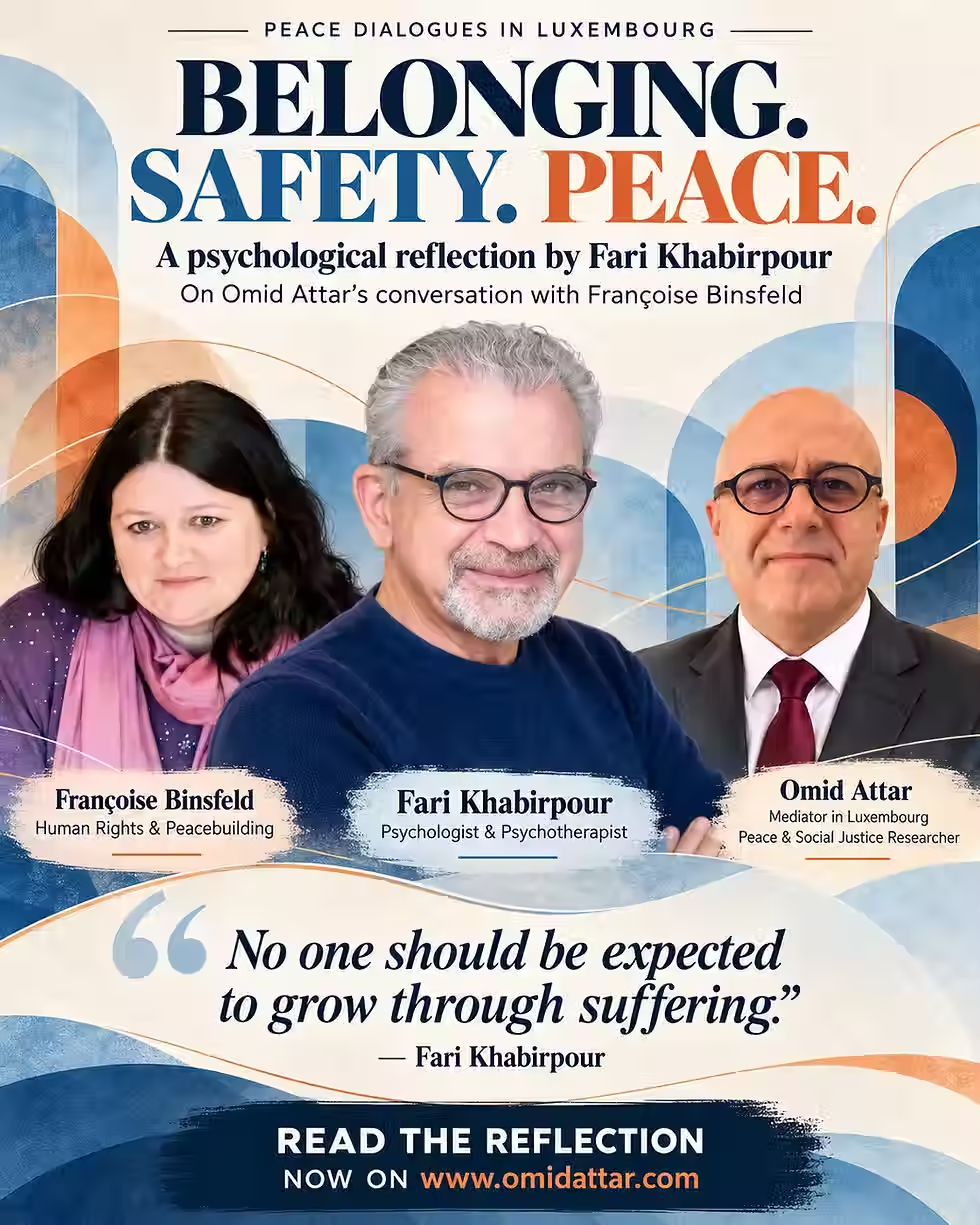
A psychological reflection on Omid Attar’s interview with Françoise Binsfeld, exploring belonging, protection, justice, and practical peace education.
This interview with Françoise Binsfeld resonated deeply with me. It connects personal experience with social responsibility and shows how closely peace is linked to human dignity, justice and the quality of our relationships. Thank you to Françoise for her thoughtful reflections and to Omid for the questions that make this exchange possible.
From my psychological perspective, I would like to reflect on some of these ideas and add a few observations.
I particularly appreciate the recognition that even in a prosperous and safe country, people may live without a real sense of security and belonging. A person’s material needs may be met, yet they may still feel overlooked, excluded or insignificant. Peacebuilding therefore also involves asking: Do I feel that I belong, that my voice matters and that I have something to contribute?
For children and young people, this last point is especially important. Alongside protection and affection, they need opportunities to take responsibility and contribute their abilities. Belonging grows when a child feels: “I am welcome here, and my contribution matters.” This also reflects my own experience of working with young people and in the Peace Factory.
I also find Françoise’s emphasis on justice and the recognition of wrongdoing particularly compelling. People who have experienced violence need space for their stories and support in regaining control over their lives. At the same time, we should be careful not to turn our admiration for their courage into an expectation. No one should be expected to grow through suffering. Exhaustion, anger and despair must also have their place.
I consider the connection between inner peace and social responsibility especially important. Self-reflection and compassion can help us act with greater awareness. However, they should never lead to an expectation that people accept degrading circumstances. Those experiencing exclusion or violence need personal support, effective protection and changes in their living conditions.
One further observation concerns emotions. When we speak about ego, self-discipline and overcoming our own reactions, we may unintentionally give the impression that difficult feelings should disappear. I would make a distinction here: anger is, first of all, an emotion that may signal hurt, powerlessness or injustice. What matters is how we respond to it. The capacity for peace also means recognising and expressing anger without hurting others.
The idea that children need to experience peace in everyday life is particularly close to my heart. They observe how adults deal with disappointment, disagreement and their own mistakes. Can parents and teachers listen? Can they apologise? Do they remain respectful when a child disagrees? These experiences give peace education its credibility. Adults, too, need support, time and opportunities to reflect on their own behaviour.
Regarding the proposed peer mediation, I would explicitly identify one limitation: where there is intimidation, repeated bullying or a significant imbalance of power, inviting both sides to a conversation is not enough. Adults must first ensure protection and take responsibility. A child who is being harmed should never feel obliged to negotiate their own safety with those hurting them.
I also find the idea of drawing on the values of martial arts interesting. I would focus particularly on the educational approach: how are strength, boundaries, consideration for others and dealing with defeat taught? These questions should be considered from the beginning of a pilot project.
I especially welcome the inclusion of boys and men as active partners. Boys need relationships in which they can express uncertainty, sadness and vulnerability without being shamed. At the same time, they need to learn to respect boundaries and take responsibility for their behaviour.
For PeaceWeave, the advice to begin with a manageable initiative seems very sound. I would involve children and young people in shaping it from the outset. When evaluating its impact, I would make a particular effort to hear from those who remain quiet or withdraw. Fewer visible conflicts do not automatically mean that everyone feels safer.
For me, the strength of this interview lies in the way it translates peace into concrete human experiences: being heard, feeling protected, respecting differences, acknowledging injustice and sharing responsibility. These can become the foundations for practical action within families, schools and society.
Fari Khabirpour
Psychologist and Psychotherapist


Comments